About
I’m a strategic technologist, transformation leader, builder and entrepreneur. For more than two decades I’ve worked where technology decisions actually matter, but I’ve never stopped building things myself.
I’m as comfortable shaping AI architecture, automation and technology strategy as I am elbow-deep in an Amiga, a classic Macintosh or an Atari. That’s not nostalgia: understanding how a machine works at its most fundamental is the same instinct that makes the strategic work good. I don’t advise from paper — I build, test, break, refine and learn, and bring that back to the strategy.
What I do
01
Technology Strategy & Transformation
Helping organisations make better technology decisions, cut through complexity and turn transformation into practical outcomes rather than slideware.
02
Architecture & Systems Thinking
Designing platforms, systems and foundations that can actually evolve, instead of becoming next year’s constraint.
03
AI, Automation & Agents
Building practical AI, automation and agents that improve real workflows and make it into production, not just a demo.
04
Products, Platforms & New Ideas
Turning rough ideas into working products, platforms, experiments and businesses.
Things I build
AI & Automation
Practical AI systems, agents and automation built around how organisations actually work.
Digital Products
Ideas taken from rough concept through strategy, UX, architecture and working software.
Web & Commerce
Platforms, marketplaces and digital experiences built around real business problems.
Experimental Projects
Prototypes, tools and ideas where emerging tech is worth testing, not just talking about.
Retro Computing
Restoring, modifying and experimenting with Amiga, Atari, Macintosh and the machines that made computing interesting.
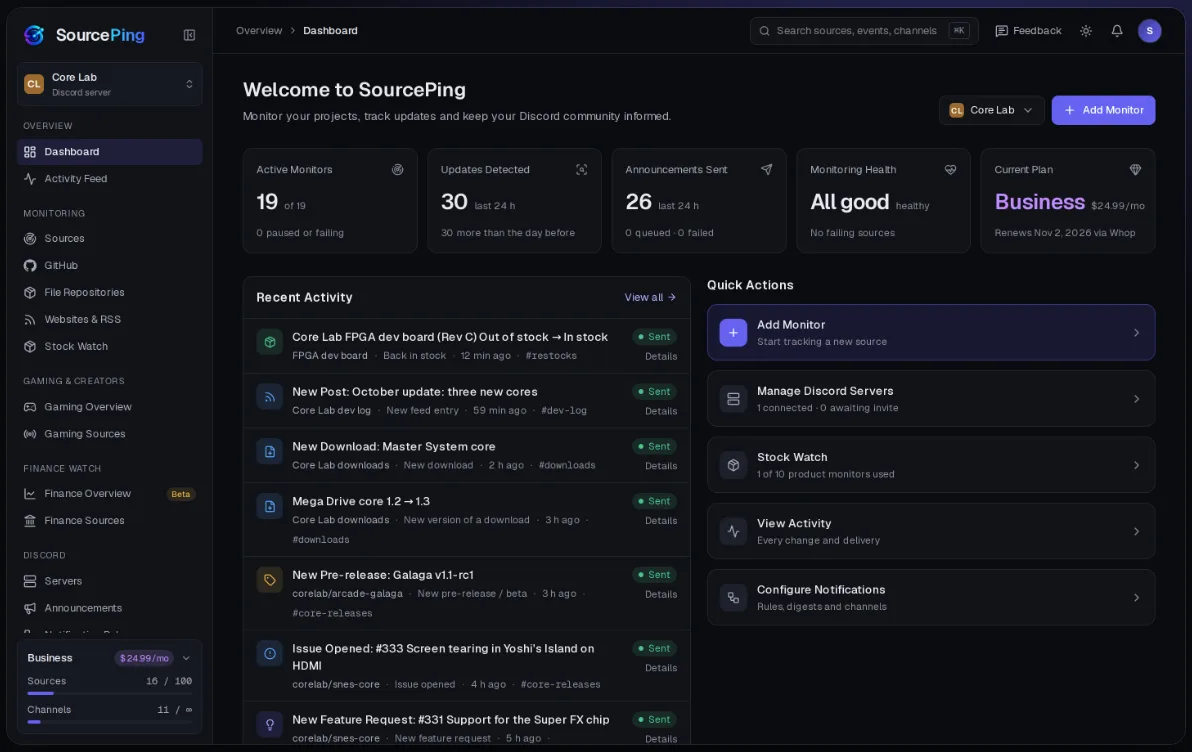
Latest on GitHub
github.com/freemchr → MegaZXNext
Mega 65 ZX Next Core
mega65gui
Mega 65 Update GUI
MegaST
Atari ST/STe core for the MEGA65, with internal floppy drive support
fluxforge
Greaseweazle GUI for Windows — back up, preserve and write floppy disks (Amiga ADF, Atari ST, PC IMG, C64 D64, raw SCP flux) with a live track map and honest results.
updateallwin
Update All for Windows
m2m-porting-lessons
Lessons learnt porting MiSTer cores to the MEGA65 with MiSTer2MEGA65 (from the MegaST Atari ST core)
What I believe
I grew up during an era when understanding computers often meant understanding what was happening beneath the surface. That curiosity is something I never want to see disappear.
But I also believe that having an idea and the ability to turn it into something useful should not be limited to those who have spent years mastering programming languages.
To me, AI should be a tool that expands human capability, not an excuse to abandon understanding.
The toolkit
How I build with AI.
The tools I code with, and the machine that runs them.
The editor
Cursor
Where the code gets written, with AI working right alongside me in the editor.
Reasoning and code
Claude
For thinking problems through, planning the work, and writing and reviewing code.
A second opinion
ChatGPT
Another angle when an idea needs testing or a problem needs a fresh pair of eyes.
The machine
HP Elite x360 1040 G11
A 14-inch 2-in-1: a laptop that folds into a tablet, with pen and touch.
- Processor
- Intel Core Ultra 7 165H
- Memory
- 64 GB
- Graphics
- Intel Arc
- Storage
- 2 TB
Without it, I’d have no chance of doing any of this.
Over a million times the memory of a Commodore 64.
What I’m exploring now
Applied AI
Moving AI out of demos and into production workflows that hold up.
Agentic Systems
Where autonomous and semi-autonomous systems genuinely improve work, and where they don’t.
Building
Products, platforms and small businesses where technology creates leverage.
Old Computers
Restoring and understanding the machines that made computing interesting in the first place.
Philosophy
My philosophy is simple.
I · Control
Control your tools.
II · Explore
Explore alternative ways.
III · Think
Think deeply.
IV · Build
Then build boldly.
The Lab
Old machines, current instincts.
Technology changes fast, but the fundamentals barely move. Working on old machines is one of the ways I keep understanding how computers really work.
Contact
Let’s build
something good.
Always open to a good conversation about technology: what’s working, what isn’t, and what’s worth building next.
mail@chrisfreeman.com.au